

'Goat on the Go' Series Becomes a Favorite for Libraries and Classrooms Teaching Emotional Literacy

Award-winning and Bestselling Children's Book Author Natalie Horseman writes kid's books that blend early literacy with social-emotional learning, sparking conversations about feelings, flexibility, and problem-solving.

Scout's Muddy Day is a playful story about curiousity, messes, and learning through hands-on exploration.
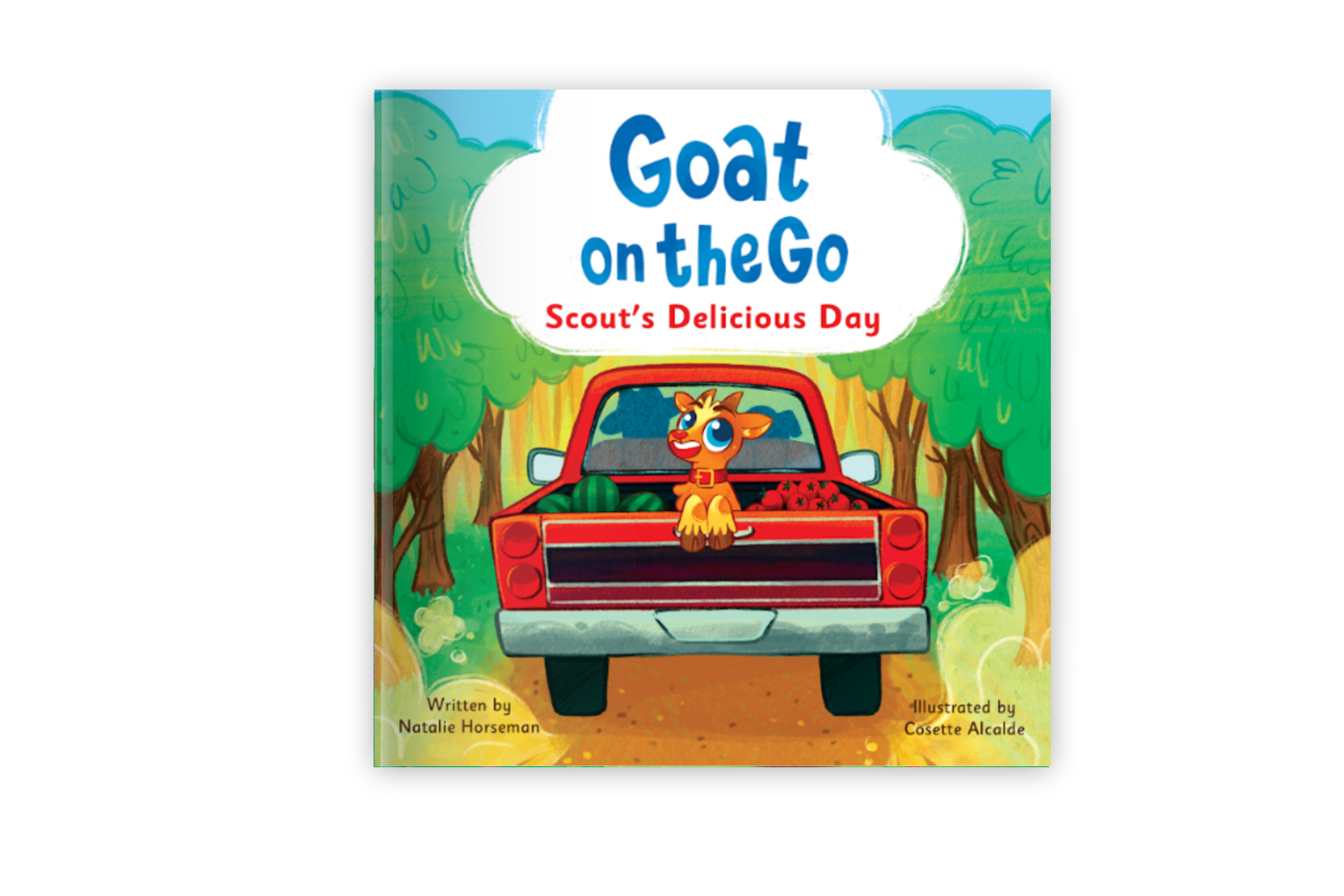
Scout's Delicious Day is a story of a joyful farm adventure centered on sharing, food, and teamwork.

Scout's Rainy Day is fan-favorite that shows children how to adapt when plans change, and how rainy days can still sparkle with imagination.

Goat on the Go: Scout nibbles on apples in the barnyard on a bright, summer day.
Why Scout the Goat is becoming a trusted character in libraries and early childhood classrooms
AUGUSTA, PA, UNITED STATES, January 13, 2026 /EINPresswire.com/ -- Libraries and classrooms are increasingly turning to children’s picture books that do more than entertain. The Goat on the Go series by Augusta native Natalie Horseman is answering that call with farm animal stories that combine literacy, emotional growth, and joyful engagement.
Designed for children ages 3–8, the series follows Scout the Goat as he navigates everyday challenges through imagination, collaboration, and optimism. Each title in the series supports early literacy while naturally reinforcing Social-Emotional Learning (SEL) concepts that align with classroom and library programming.
Local Author, National Reach
As an Augusta native, Horseman is especially proud to see her books embraced by libraries and schools. “I fell in love with reading and storytelling in local Augusta libraries,” she says. “To know Scout is now part of that experience for other children is incredibly meaningful.”
A Series That Resonates with Families and Educators
The Goat on the Go series has earned enthusiastic responses from parents and caregivers who see its impact firsthand during shared reading experiences. Reviewers frequently mention how naturally the stories open conversations about feelings, adaptability, and problem-solving which are key components of emotional literacy in early childhood.
“Another adorable book in the Goat on the Go series,” one reader wrote. “It teaches little ones that even though plans can change, you can still make the best of it. The illustrations are colorful, and the barnyard characters are fun and engaging.”
Others emphasize the series’ suitability for repeated read-alouds. “The kids loved the story and illustrations,” shared another reviewer. “I hope to see more of Scout’s adventures in the future.”
International readers echo this enthusiasm. A reviewer from the United Kingdom described reading the book to her three-year-old grandson, noting that the story invited “lots of talk about animals and the farm,” and calling the illustrations “beautiful” and the message “encouraging and magical.”
Through reviews, families consistently describe the series as gentle, upbeat, and effective books that support emotional understanding while keeping children engaged, making them a natural fit for libraries, classrooms, and family reading programs.
Educators and librarians value Goat on the Go for its strong read-aloud appeal and discussion-ready themes. Scout’s experiences mirror the kinds of challenges children face daily, changes in routine, disappointment, problem-solving with peers, making each book an ideal springboard for conversation.
“Scout gives kids language for feelings without overwhelming them,” Horseman explains. “Teachers and librarians tell me kids want to talk about what Scout felt, and what they would do next.”
Titles in the Series
• Goat on the Go: Scout’s Muddy Day
Perfect for discussions about exploration, sensory learning, and curiosity.
• Goat on the Go: Scout’s Delicious Day
Encourages cooperation, sharing, and group participation.
• Goat on the Go: Scout’s Rainy Day
Ideal for lessons on flexibility, resilience, and managing disappointment.
Each book is richly illustrated and designed to hold children’s attention during story time while reinforcing literacy skills and showing resiliency through Scout’s farmyard interactions.
A Trusted Voice in Child Development
Horseman’s credentials uniquely position her within the children’s literature space. With formal training in child development and advanced nursing education from Augusta University, she brings professional insight into stories that remain warm, playful, and accessible.
Her work is frequently praised for striking a balance between emotional depth and storytelling joy, something educators say is increasingly hard to find.
Why Emotional Literacy and Social-Emotional Learning Matter More Than Ever
Schools, libraries, and families are placing increased emphasis on social-emotional learning (SEL) as children face emotional challenges earlier and more intensely than previous generations. Changes in routine, overstimulation, social pressure, and uncertainty, both at home and in the wider world, mean young children are navigating disappointment, frustration, and big feelings long before they have the language to explain them.
Educators consistently report that emotional regulation directly affects a child’s ability to learn, focus, and engage. When children struggle to name or manage emotions, it often shows up as inattention, withdrawal, or disruptive behavior, making learning harder for everyone involved.
That’s where emotionally literate storytelling plays a powerful role.
Rather than instructing children on how they should feel, SEL-focused books help children recognize emotions, see them modeled safely, and explore what comes next. Research and classroom experience alike show that children develop stronger academic and social outcomes when emotional skills, such as flexibility, empathy, and problem-solving, are supported early.
How “Goat on the Go” Models Emotional Skills, Without Lectures
The Goat on the Go series by Natalie Horseman stands out because it models emotional intelligence through story, not instruction.
Scout the Goat encounters situations that feel immediately familiar to young readers. His plans don’t always unfold the way he expects and things sometimes get messy; feelings can be hurt and change often arrives without warning. These moments mirror the everyday experiences children face at home, in classrooms, and on playgrounds, making Scout’s journey instantly relatable and emotionally accessible.
Rather than rushing past these moments or resolving them too quickly, the stories give children time to notice what happens when emotions surface. Readers are invited to observe emotional reactions, sit with disappointment, and watch as characters pause and adjust to new circumstances. As each story unfolds, creativity, collaboration, and optimism emerge organically, showing children that emotions are not obstacles to overcome but signals that can lead to new ideas, connections, and growth.
This approach mirrors how children learn emotional regulation and resiliency; not by being told what to do, but by seeing it played out in a relatable, low-stakes environment.
“Children don’t need another voice telling them to calm down,” Horseman explains. “They need examples of what it looks like to feel something, stay connected, and move forward.”
Supporting Literacy Beyond the Page
The Goat on the Go series is frequently used as more than a simple read-aloud, serving instead as a flexible literacy tool that extends learning beyond the story itself. Librarians and educators often incorporate Scout’s adventures into story time programming that blends early literacy with social-emotional learning, using the narrative as a starting point for age-appropriate conversations about feelings, flexibility, and problem-solving.
In classroom settings, the books naturally open the door to discussions about emotions and adaptability. Because Scout experiences familiar challenges, children are quick to recognize their own feelings in the story. Teachers report that this recognition helps children articulate emotions more easily and engage in thoughtful dialogue about what they might do in similar situations
.
Libraries can also use the series to inspire themed activities and displays that encourage continued engagement. Scout’s farmyard world lends itself to imaginative play, seasonal programming, and creative exploration, allowing children to revisit the story through art, movement, and discussion. These extensions help reinforce both comprehension and emotional understanding while keeping young readers excited about returning to books.
Beyond institutional settings, the Goat on the Go series supports parent-child reading initiatives by encouraging shared reading experiences that naturally lead to conversation. Parents and grandparents often find that Scout’s stories provide a gentle framework for talking about disappointment, change, and cooperation without pressure or correction, making reading time both comforting and meaningful.
To support extended learning, author Natalie Horseman also offers downloadable resources and printable activities that complement the books. These materials allow families, educators, and librarians to deepen engagement in ways that fit their unique environments, reinforcing literacy and emotional growth long after the last page is turned.
The Goat on the Go series is available through Amazon and directly from the author’s website.
Learn more and access educator resources:
https://nataliehorseman.com/shop/
About the Author
Natalie Horseman is an award-winning, bestselling children’s author and nurse whose books blend literacy, imagination, resilience, and emotional learning. Writing in the genres of Children’s Picture Books, Social-Emotional Learning, and Animals and Farm Life, she is the creator of the Goat on the Go series and the author of The Bumpy Pumpkin, recognized by the Moonbeam Children’s Book Awards. Her work supports children, families, early childhood educators, therapists, and libraries nationwide.
Natalie Horseman
Horseman Books
email us here
Legal Disclaimer:
EIN Presswire provides this news content "as is" without warranty of any kind. We do not accept any responsibility or liability for the accuracy, content, images, videos, licenses, completeness, legality, or reliability of the information contained in this article. If you have any complaints or copyright issues related to this article, kindly contact the author above.
