

New Surveys from Brookings and National Collaborative For Health Equity Reveal a More Connected, Inclusive America

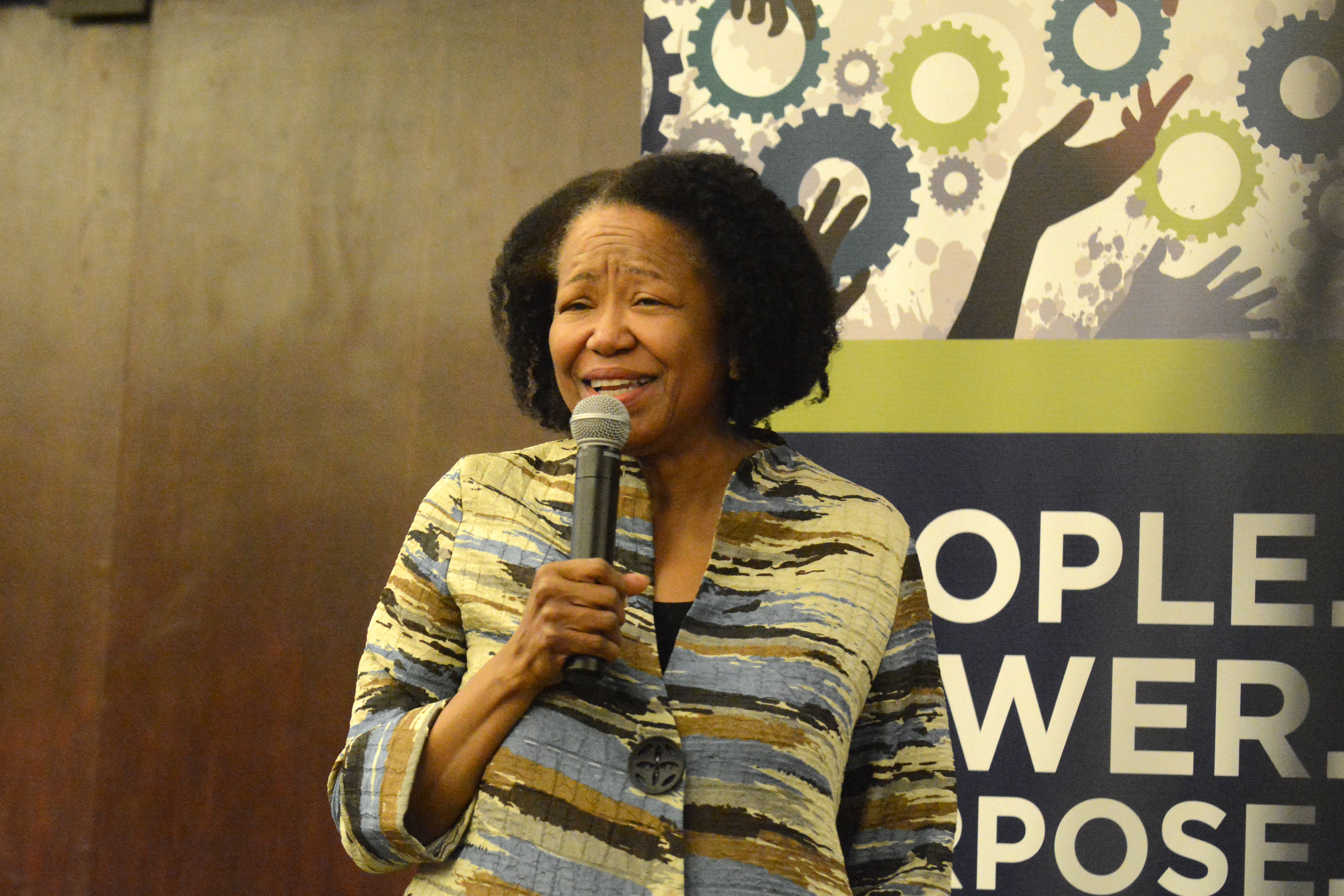
Dr. Gail C. Christopher

Dr. Andre M. Perry
Their comprehensive research offers a powerful counter-narrative to cynicism about race relations in the U.S.
WASHINGTON, DC, UNITED STATES, March 3, 2026 /EINPresswire.com/ -- Amid a public discourse often dominated by narratives of polarization and conflict, a compelling new picture of American society is emerging—one defined not by division, but by a profound and growing capacity for connection. Two major bodies of research, the Brookings Institution’s "Interracial Cooperation in the United States" report and the National Collaborative for Health Equity’s (NCHE) 3rd Annual Heart of America Survey, reveal that a vast majority of Americans are rejecting explicit racial bias and actively building meaningful relationships across racial lines.
These findings offer a powerful counter-narrative to cynicism about race relations in the U.S. While structural barriers remain, the data show Americans are increasingly building common ground and fostering societal cooperation, inspiring optimism for the future.
Beyond the Headlines: A Reality of Cooperation
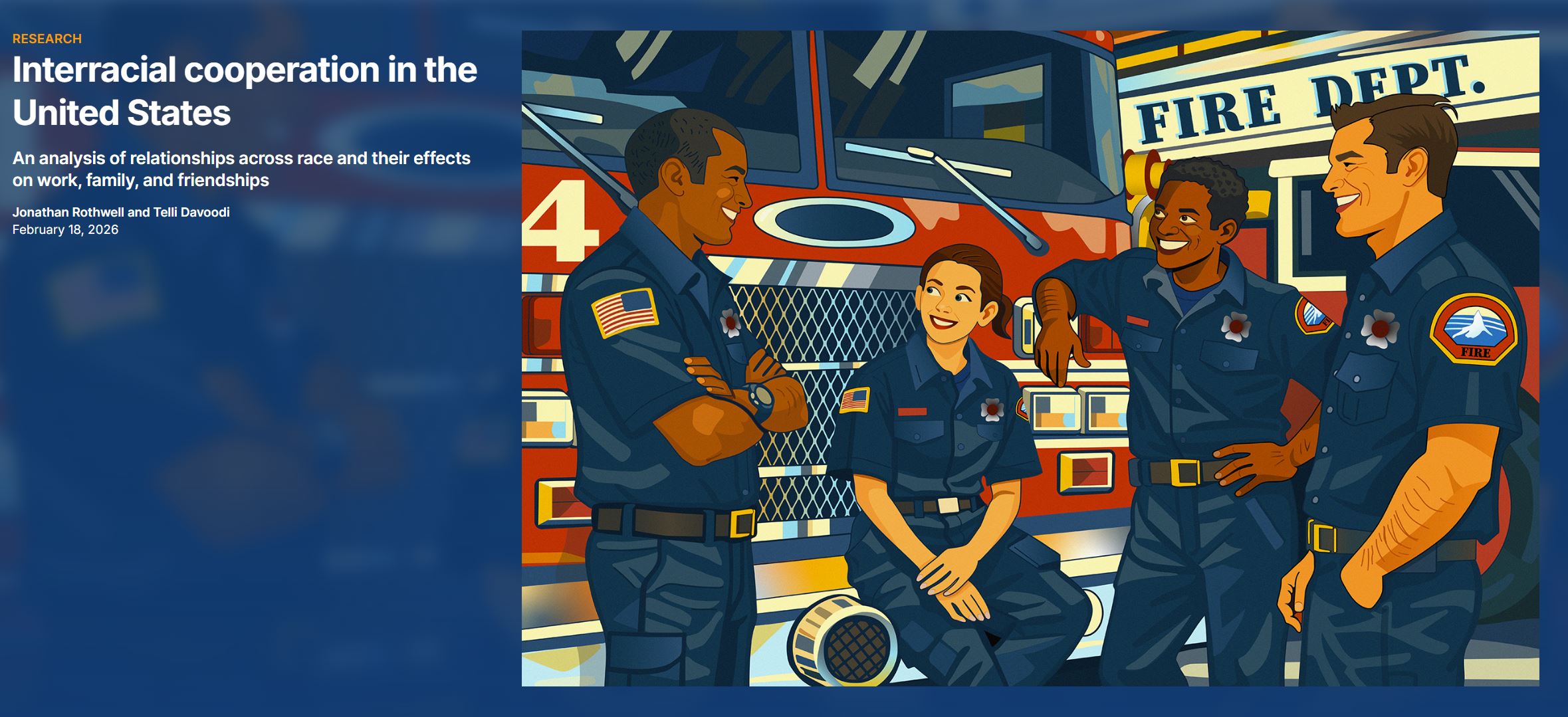
The Brookings Institution report, authored by Jonathan Rothwell and Telli Davoodi, provides a rigorous data-driven look at how Americans interact. Contrary to the belief that the nation is hopelessly fractured, the study finds that explicit racial bias is rare in the daily decisions that shape our lives.
According to the report, 2026, 87% of U.S. adults state that race is not a factor in their business decisions, and 83% say the same for selecting friends. Instead of racial identity, Americans are prioritizing traits that are contextually relevant, such as shared values, reputation, and qualifications. This trend extends into the workplace, where 85% of respondents in hypothetical hiring scenarios demonstrated race-neutral preferences. Candidate qualifications, including interview performance and credentials, were found to be far more influential than race, which explained only a fraction of hiring decisions.
Dr. Gail C. Christopher, Executive Director of the National Collaborative for Health Equity (NCHE), views these findings as evidence of a significant cultural evolution.
“The Brookings study reminds me of the past era of race relations,” Dr. Christopher noted. “Those of us who have been justice activists for the last 50 years, we wanted to move beyond race relations into discussing structural racism. At the same time, there is an imperative to develop the ability to see ourselves in one another and move beyond the barriers that the hierarchy of human value creates.”
The Normalization of Interracial Life
The Brookings data, produced by scholars at Gallup and the Brookings Institution’s Center for Community Uplift, underscores that interracial exposure is now common among many Americans: 83% work alongside colleagues of different races, and nearly half have diverse supervisors, illustrating how everyday interactions are fostering familiarity and reducing prejudice.
“People’s ratings of their day-to-day realities reflect a much different America from what is splattered across social media and uttered by politicos,” said Andre M. Perry, a senior fellow and director of the Center for Community Uplift at Brookings. “We are witnessing progress indicated by the day-to-day interactions of Americans of all racial backgrounds.” Further, Perry issued a comprehensive report on the research, noting that the data contradicts assertions that the U.S. is increasingly divided by race.
Moreover, friendship networks are also expanding across racial lines. The study found that 72% of adults have at least one friend from another race, and more than half have a close friend of a different racial background. Crucially, the quality of these relationships matches that of same-race friendships, suggesting that once formed, these cross-racial bonds are just as deep and rewarding.
Perhaps the most striking evidence of this shift is in romantic partnerships. Among adults under 30, 35% are in interracial relationships, a stark contrast to the 14% observed in the over-70 demographic. These relationships show no significant difference in satisfaction compared to same-race unions, signaling that for younger generations, racial boundaries are becoming increasingly irrelevant in matters of the heart.
The Heart of America: A Yearning for Unity
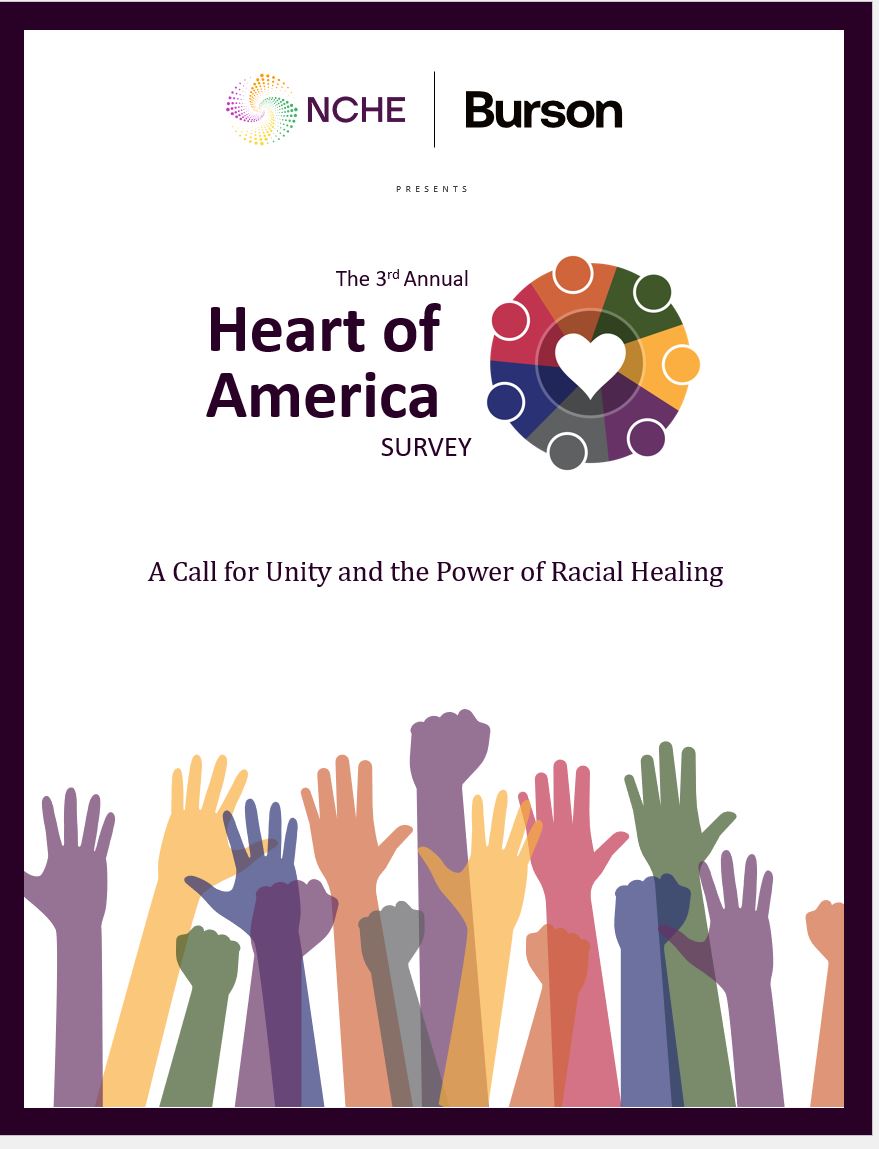
Complementing the behavioral data from Brookings, the NCHE’s 3rd Annual Heart of America Survey captures the emotional and aspirational pulse of the nation. Conducted by Burson’s Insights, Data, and Intelligence Group, the survey reveals a citizenry that is tired of division and hungry for healing.
The survey found that 76% of Americans believe they can overcome challenges through shared understanding, and 72% take pride in their identity as an American, reflecting a widespread sense of unity and hope for a more cohesive society.
“Beneath the divisive political rhetoric and social media echo chambers, a far more profound story is unfolding in communities across the country,” said Dr. Christopher. “Respondents in the annual Heart of America survey have revealed a nation grappling with profound challenges, but also one brimming with a resilient spirit, a surprising yearning for unity, and a quiet, yet powerful, recommitment to the very principles and values that America was founded on.”
This desire for connection and shared humanity, with 87% of Americans wanting to belong and trust one another, should inspire populations to see the potential for societal cohesion and collective progress.
Consensus on Healing and Justice
The NCHE survey also uncovered a surprising consensus on specific issues often portrayed as divisive. For instance, despite heated rhetoric regarding immigration, 73% of Americans agree that immigrants, regardless of legal status, should be guaranteed due process. Furthermore, 77% believe immigrants enrich the diversity of American society, a view held by majorities across racial and political lines.
On racial healing, Americans are largely aligned on the necessary first steps. The poll reveals that 83% of Americans—including 90% of Democrats and 78% of Republicans—believe that educating children on the history of race and racism is important for the nation’s healing. Similarly, 89% of Democrats and 70% of Republicans agree that promoting diversity in the workplace is vital to addressing the harms of racism. Forty-three percent of those polled responded positively to reparations for the harms of slavery, while 37% responded negatively.
“We know when we take a human perspective, when we get over the egos and the politics and the greed, when we really get down to living everyday life, we want peace,” Dr. Christopher explained. “We want to be able to get along. We really don’t want this kind of division.”
Optimism in the Face of Structural Challenges
Neither study ignores the reality of structural inequality. The Brookings report candidly notes that residential segregation and occupational clustering continue to limit interracial contact for many, particularly for Black, Asian, and Latino workers who may have fewer different-race colleagues than population shares would predict. Structural factors continue to shape patterns of interaction, even as explicit individual bias declines.
However, the convergence of these two studies suggests that the foundation for overcoming these structural barriers is stronger than many realize. The "Interracial Cooperation" report concludes with an optimistic outlook, noting that sustained exposure and collaboration are key to reducing prejudice. Similarly, the Heart of America survey indicates that Americans are ready for leadership that prioritizes this collaboration. A decisive 86% of respondents would support a leader who aims to unite the country, even when they disagree on specific issues.
A seasoned pollster, Shannon-Janean Currie, founder of Empirica Advisors and lead researcher for the NCHE Heart of America Survey, emphasized the significance of these findings. “Taken together, these findings challenge the assumption that division defines the American experience,” she said. “While structural barriers remain, the data show broad readiness for cooperation, fairness, and leaders who can build common ground.”
An Undeniable Message of Hope
Taken together, the Brookings data and the NCHE survey present what Dr. Christopher calls an “undeniable message of hope.” One study documents the reality of our daily interactions—increasingly cooperative, integrated, and fair. The other documents our internal landscape—hopeful, empathetic, and eager for unity.
As the nation looks toward the future, these findings offer a blueprint for progress. They suggest that the path forward doesn’t lie in deepening trenches, but in leveraging the existing reservoir of goodwill and cooperation that already defines much of American life. By recognizing progress in interpersonal relationships and aligning policy with the public’s true desire for unity, the United States is well-positioned to bridge its divides.
“America is better than our day-to-day headlines might tell us,” Dr. Christopher asserted. “America is stronger than our politics would lead us to believe. ‘We the People’ is a true statement of a multiracial, multi-ethnic, multi-religious democracy. That’s who we, the people, are.”
###
(For print or broadcast interviews with Dr. Christopher, please contact Michael Frisby at mike@frisbyassociates.com or 202-625-4328.)
About the National Collaborative for Health Equity
Founded in 2014, NCHE was established to promote health equity through action, leadership, inclusion, and collaboration. We work to create environments that foster the best possible health outcomes for all populations, regardless of race, ethnicity, socioeconomic status, or nativity. NCHE also works to improve conditions for health and well-being, including housing, education, income and wealth, and the physical and social environment. Further, we must address historical and contemporary structural, institutional, and interpersonal racism, which fuels inequities in our society.
Michael K. Frisby
Frisby & Associates
+1 202-625-4328
mike@frisbyassociates.com
Visit us on social media:
LinkedIn
Facebook
Legal Disclaimer:
EIN Presswire provides this news content "as is" without warranty of any kind. We do not accept any responsibility or liability for the accuracy, content, images, videos, licenses, completeness, legality, or reliability of the information contained in this article. If you have any complaints or copyright issues related to this article, kindly contact the author above.
