

Special Needs Care Network Helps Families Find ABA Therapy as Autism Reaches 1 in 31 Children
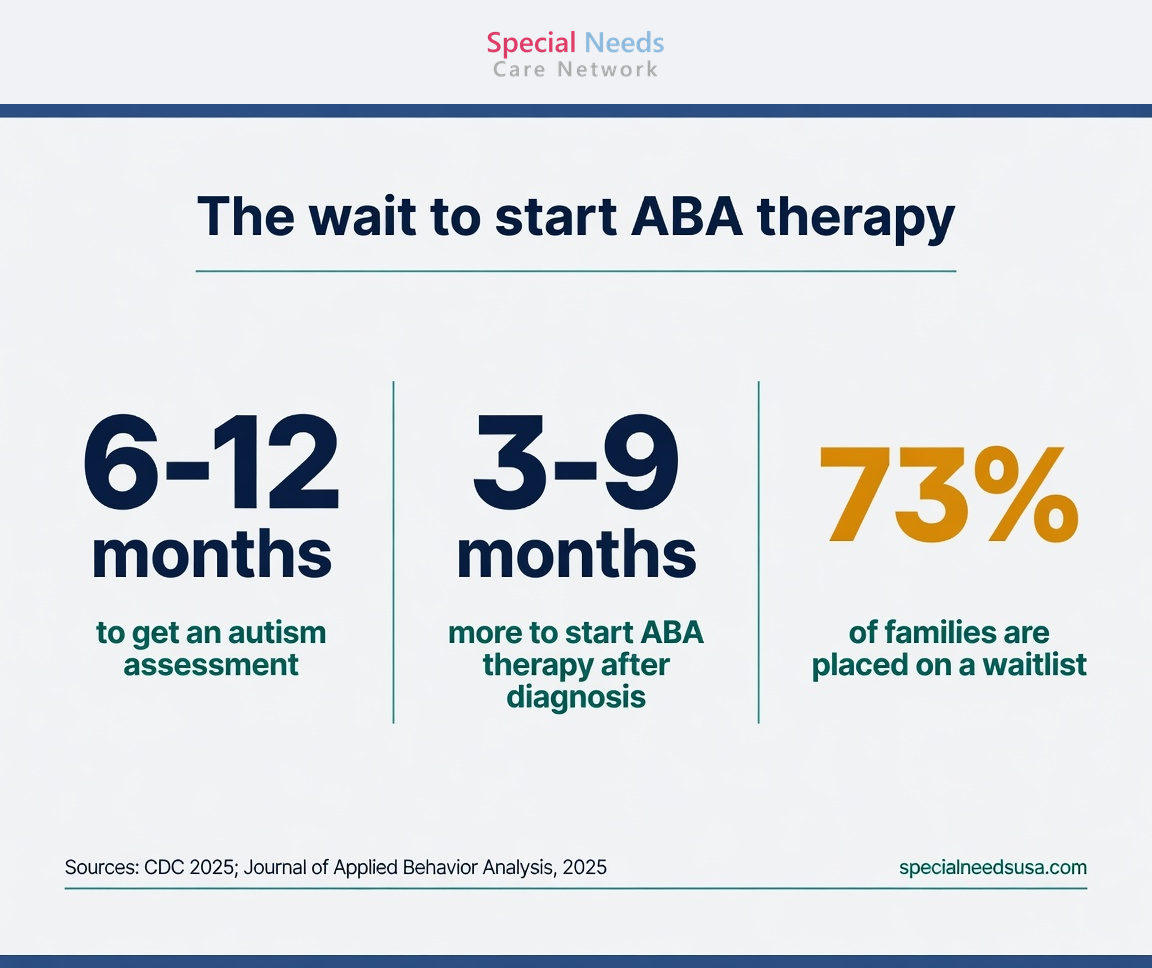
Families typically wait 6 to 12 months for an autism assessment and 3 to 9 more months to start ABA, and about 73 percent are placed on a waitlist. Sources: CDC; Journal of Applied Behavior Analysis.
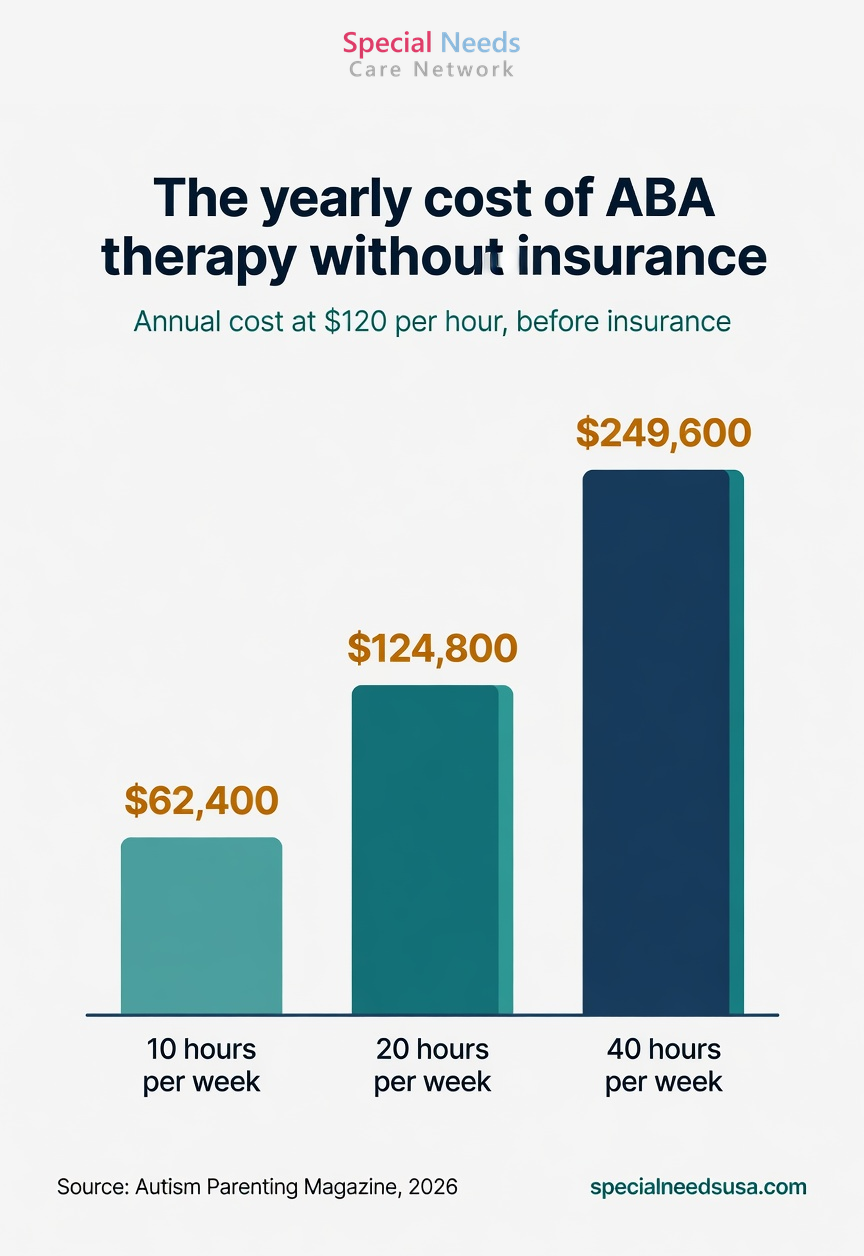
Without insurance, a year of ABA therapy costs from 62,400 to 249,600 dollars depending on weekly hours, at 120 dollars an hour. Source: Autism Parenting Magazine.
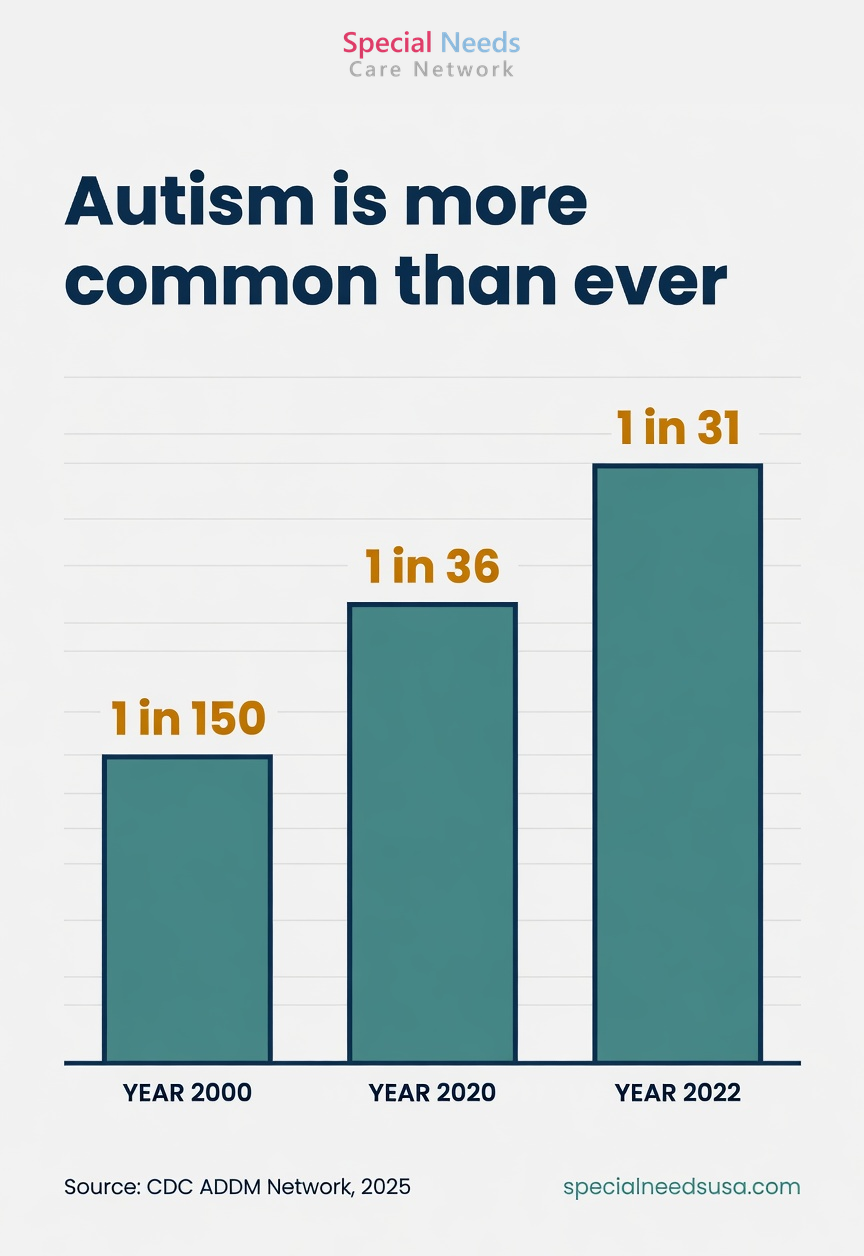
U.S. autism prevalence among 8-year-olds rose from 1 in 150 in 2000 to 1 in 31 in 2022. Source: CDC.
The free service matches parents with ABA providers who are taking new clients, after a new report finds families waiting close to a year to start care.
The match is free. There is no fee to the family at any point, and parents do not have to create an account to get help. The service works the same way whether a family wants in-home therapy, a center-based program, or telehealth, and it focuses on the one thing parents cannot see from a web search: which providers actually have room right now. Alongside the matching service, Special Needs Care Network keeps a searchable directory of schools, therapy centers, and ABA providers, so parents who would rather look on their own can do that too.
The company also published a report this week, The State of ABA Therapy Access in America, that gathers public data on how hard it has become to get care. The picture it paints is a simple mismatch: demand for ABA has never been higher, and the supply of people who can deliver it has not kept up.
Autism now affects 1 in 31 U.S. children, according to the CDC's most recent count, based on 2022 surveillance data published in 2025. That is up from 1 in 36 in 2020 and 1 in 150 in 2000. The rate is not the same everywhere. It runs from about 1 child in 100 in parts of Texas to 1 in 19 in California, and the CDC ties much of that spread to whether a community has the clinics and specialists to diagnose children in the first place. A lot of the gap, in other words, is about access, not about where autism actually happens.
ABA, short for Applied Behavior Analysis, is the therapy doctors most often recommend for autistic children, and it is expensive without insurance. At a common rate of 120 dollars an hour, a year of therapy runs from about 62,400 dollars for a light schedule to 249,600 dollars for a full one. Families with coverage usually pay a fraction of that, which is why insurance matters so much.
On paper, the coverage is there. All 50 states require private insurance to cover autism treatment, and all 50 cover ABA through Medicaid for children who qualify. That has not settled the problem. Some plans cap the number of hours or set age limits, and Medicaid pays providers less, which pushes Medicaid families to the back of longer lines. Even families whose plans clearly cover ABA often run into prior-authorization requirements, and many have to appeal a denial before their child can start. In 2026 the pressure grew, as several states moved to trim Medicaid reimbursement for ABA after their spending on the therapy climbed sharply. North Carolina alone spent 505 million dollars on ABA in 2025, up from under 2 million five years earlier.
The wait is the part parents feel most. About 73 percent of families end up on a waitlist before they can start, according to a 2025 study in the Journal of Applied Behavior Analysis. Nationally, parents wait 6 to 12 months just to get an autism assessment, then another 3 to 9 months to begin therapy after the diagnosis. That same study found that children's behavior often got worse the longer they sat on a list. For young children the delay carries a cost of its own, because ABA tends to help most when it starts early, so a year spent waiting is not neutral time.
Behind the waitlists is a shortage of qualified providers. Demand for board-certified behavior analysts grew 28 percent in a single year, and by recent estimates around 50,000 positions sit unfilled. The professionals who can deliver ABA are also clustered in a few states, with five states accounting for close to 40 percent of national demand. That leaves families in rural areas driving long distances, or waiting the longest of anyone. In the places that were already underserved, a single new opening can draw families from across a region.
Special Needs Care Network built its matching service around that gap. Rather than list every provider and leave parents to dial through them, it works with providers who are open to new clients and connects families to them directly, and the company says it is adding providers and coverage in more states so fewer parents are left working the phones alone.
Parents can get matched with an ABA provider for free or browse ABA therapy providers by state through Special Needs Care Network. The full report, The State of ABA Therapy Access in America, lays out the data with charts and sources.
About Special Needs Care Network
Special Needs Care Network helps parents of children with special needs find schools, therapy providers, and ABA services across the United States. Its free concierge service matches families with providers who are taking new clients, and its directory lets parents search on their own. The company builds its resources from public data and direct work with providers, and it does not charge families to use the service. Learn more at specialneedsusa.com.
Kyle Serebryanny
Special Needs Care Network
admin@specialneedsusa.com
Visit us on social media:
LinkedIn
Instagram
Facebook
YouTube
X
Legal Disclaimer:
EIN Presswire provides this news content "as is" without warranty of any kind. We do not accept any responsibility or liability for the accuracy, content, images, videos, licenses, completeness, legality, or reliability of the information contained in this article. If you have any complaints or copyright issues related to this article, kindly contact the author above.
