
More Than a Meal: Indigenous Cooking Brings Natchez History to Life
The aroma of simmering squash, corn, and beans drifted through the Grand Village of the Natchez Indians as visitors gathered around to watch a centuries-old tradition come to life.
At the 128-acre National Historic Landmark administered by the Mississippi Department of Archives and History (MDAH), history is more than something preserved in exhibits—it's experienced through demonstrations of Indigenous cooking, crafts, and culture that connect modern audiences with the people who first called this land home.
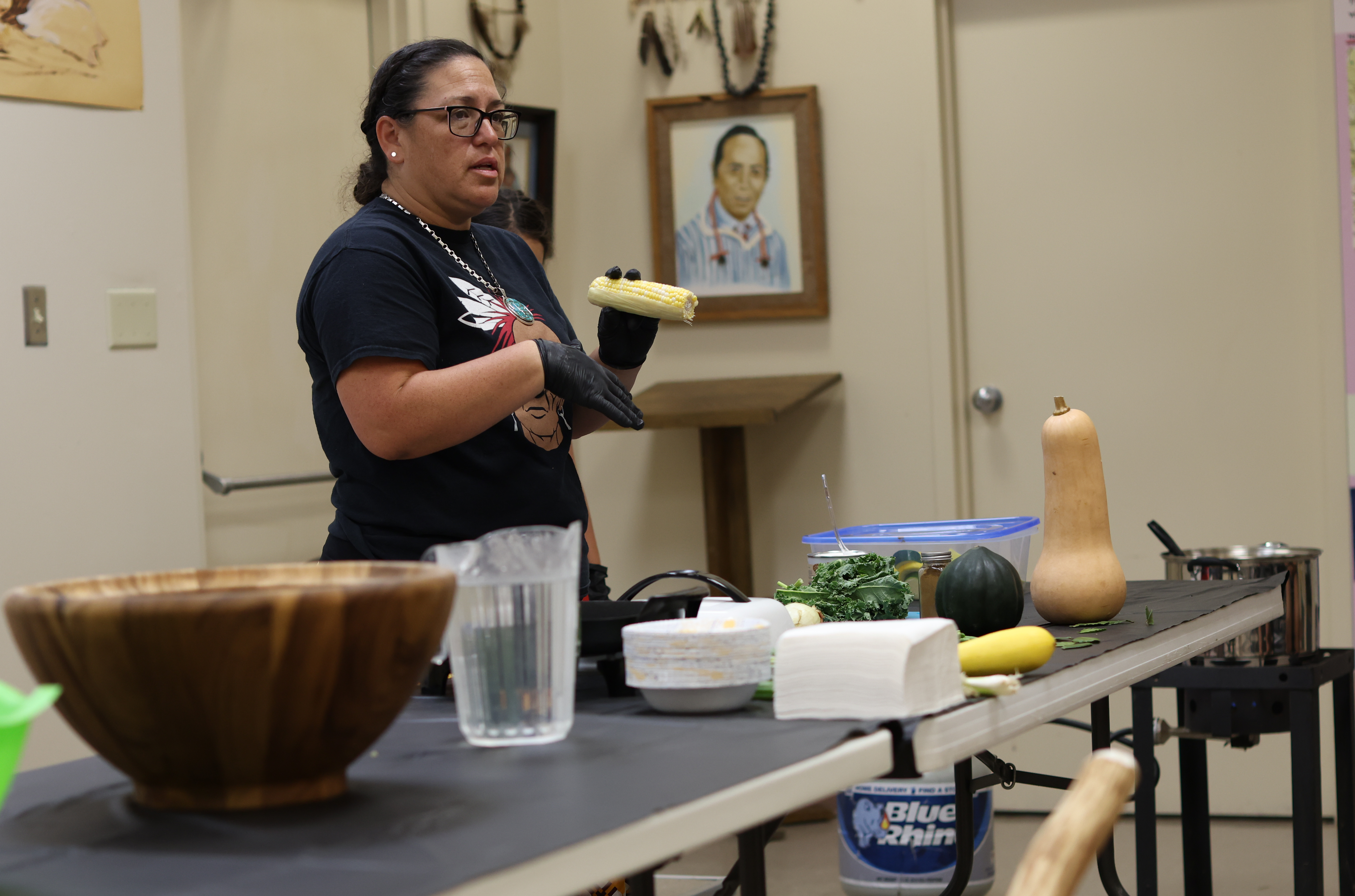
Leading one such demonstration was Rebekah Scott, a descendant of Natchez, Cherokee, and Creek ancestry. Traveling from her home in Oklahoma, Scott regularly returns to Natchez to share the traditions, stories, and recipes passed down through generations.
During the recent two-hour program, Scott prepared Three Sisters Stew, a traditional dish built around three crops that Indigenous communities cultivated together for centuries: corn, beans, and squash. Known collectively as the "Three Sisters," the plants supported one another in the field, with corn providing a natural trellis for climbing beans, beans enriching the soil with nitrogen, and sprawling squash vines helping retain moisture and suppress weeds.
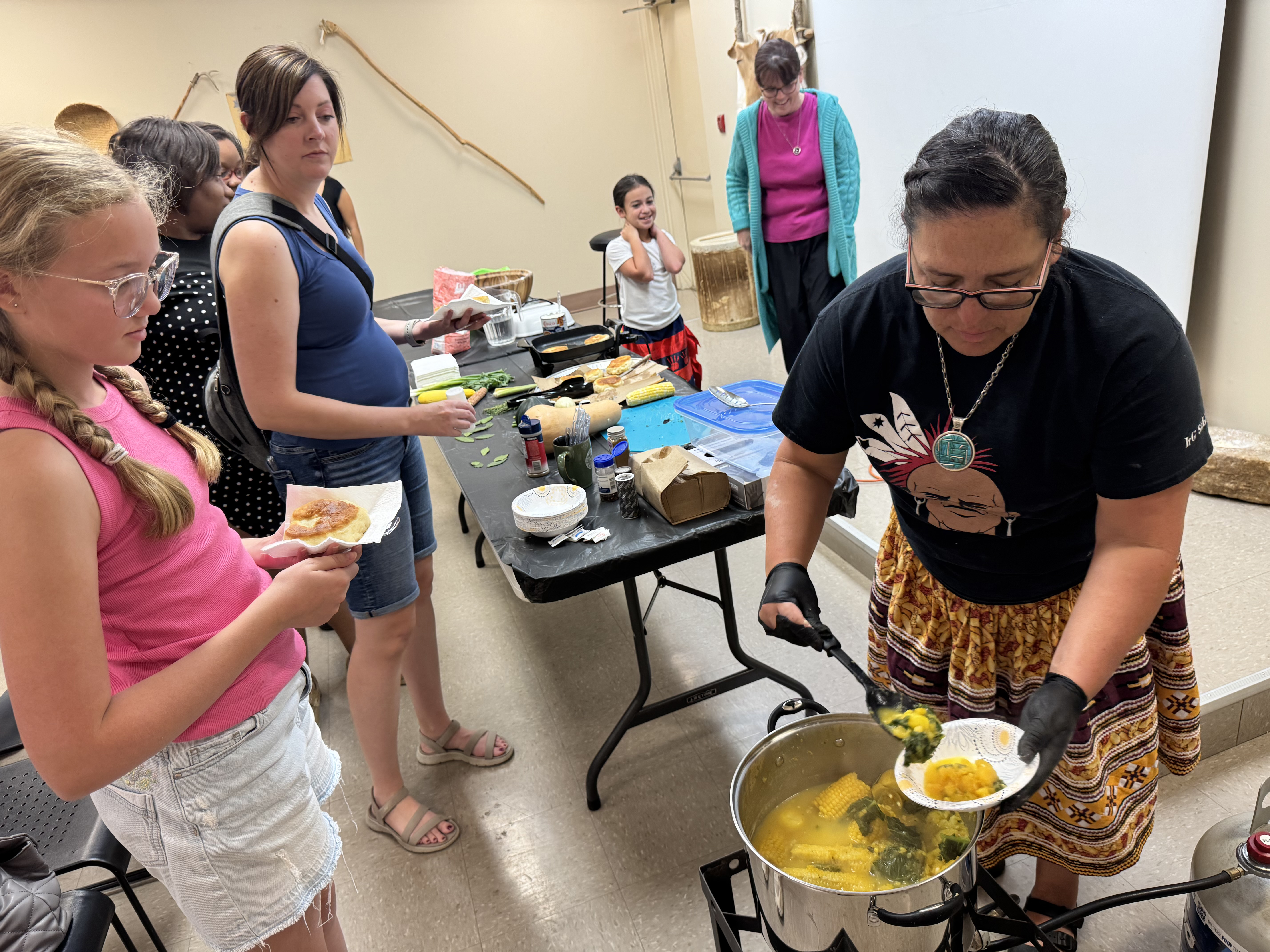
The same ingredients that worked together in the garden came together in the cooking pot.
"The stew is a comfort food that anyone can make, and it doesn't have to be specific to one culture or race," Scott said.
As the stew simmered, Scott shared stories of Natchez history, explaining that the area was once known as Nachi (pronounced "Nah-chee") Town, reflecting its Indigenous roots long before the modern city of Natchez was established. She emphasized that cooking has always been about more than nourishment—it has been a way to preserve family traditions, strengthen communities, and pass knowledge from one generation to the next.
Those lessons were on full display as Scott's daughters worked alongside her, helping prepare both the stew and traditional fry bread, demonstrating how these customs continue to be shared within families today.
Made from simple ingredients—flour, water, and lard—fry bread proved to be an instant favorite among visitors. Fresh from the skillet, it paired perfectly with the hearty stew and quickly became one of the day's most talked-about dishes.
"The Three Sisters Stew was hearty and flavorful," said Robbie Peters, a Brandon native visiting Natchez while home from Qatar. "It's hard to put the spoon down. But that fry bread was really good, too. Great event here in Natchez."
For Angelika Alford of Natchez, the program offered a deeper appreciation of the region's earliest history.
"It was a very, very nice representation and very informative," she said.
The Blauer family of Pullman, Washington, discovered the Grand Village while traveling through Mississippi between a Taekwondo tournament in Arkansas and an academic conference in New Orleans. Their unexpected stop became a memorable highlight of the trip.
"We drove around a little bit trying to explore the area, and it's like a little hidden piece of history that we didn't know about until just a few days ago," Melanie Blauer said. "We are happy we stopped in."
After sampling the fry bread, she was already imagining making it at home.
"This fry bread would taste really good with some potato soup or clam chowder," she said. "We'll have to give this a try soon."
Scott hopes that's exactly what visitors take away—not only recipes, but traditions worth sharing.
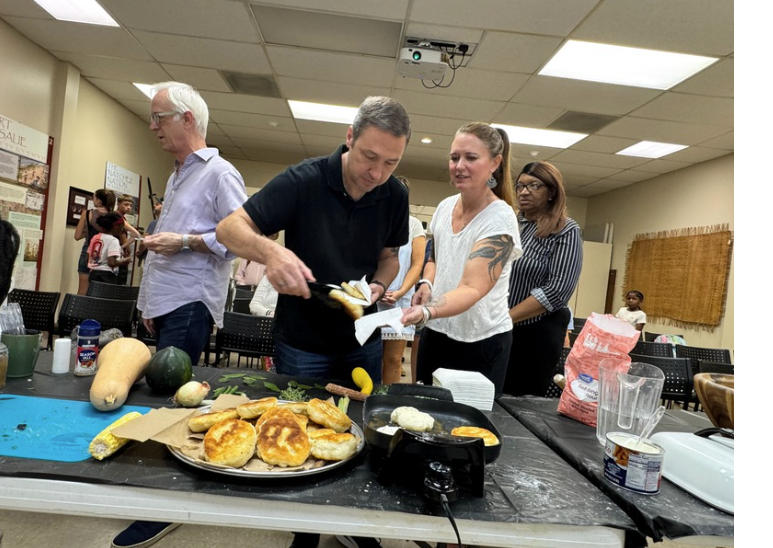
"It's something to bring in grandmothers and families and aunts and kids to do," Scott said. "All of my daughters make fry bread."
For Scott, every demonstration is an opportunity to reconnect people with the Indigenous history that began in Natchez long before written records.
"I think that with this town being so keen on history and culture, this is where it started," she said. "The history and the culture from Native Americans—and just sharing and giving back something that I was taught—is the most important."
Visitors to the Grand Village can continue exploring that history year-round through the site's Visitor Center, museum exhibits, gift shop featuring Native American crafts, and walking trails that wind through one of Mississippi's most significant archaeological and cultural sites. Admission and parking are free, making the Grand Village an inviting destination for anyone interested in experiencing the rich heritage of the Natchez people.
The Grand Village is located at 400 Jefferson Davis Boulevard and is open to the public from 9 a.m. to 5 p.m. Monday through Saturday and Sundays 1:30 to 5 p.m.
Legal Disclaimer:
EIN Presswire provides this news content "as is" without warranty of any kind. We do not accept any responsibility or liability for the accuracy, content, images, videos, licenses, completeness, legality, or reliability of the information contained in this article. If you have any complaints or copyright issues related to this article, kindly contact the author above.
